1.计算机系统由硬件系统和软件系统组成
2.硬件系统结构:冯诺依曼系统结构由运算器、控制器、存储器、输入设备、输出设备
3.软件系统:软件分类(系统软件和应用软件)
4.信息存储:字节是存储数据的基本单位
1.计算机系统由硬件系统和软件系统组成
2.硬件系统结构:冯诺依曼系统结构由运算器、控制器、存储器、输入设备、输出设备
3.软件系统:软件分类(系统软件和应用软件)
4.信息存储:字节是存储数据的基本单位
influence v.影响;感化 n.影响,权势
beauty spot 风景胜地,风景点
cliff n.悬崖;峭壁
unspoiled adj.未损坏的
cold shoulders 冷落
serious 严肃的
enriching
1. sketch vt 草拟;速写;简略地描述,一般指快速地勾勒或概略地叙述。
eg. Sketch out what you intend to do.
简略的描述一下你打算做什么。
eg. At the meeting he give a sketch of recent happenings. 在会上他简述了最近发生的事件。
2. describe : 侧重描述细节,给读者或听众提供清晰的视觉图像。
3. represent: 指有代表性或象征性地描述或讲述。
eg. There pictures represent Japanese landscapes at all seasons of the year.
这些画描绘日本一年四季的风景。
4. picture: 着重能够栩栩如生地把事务或场景描绘出来。
eg. The artist used red and orange to picture the sunset. 那位画家用红色和橙色画落日。
5. turning point : 转折点;转机
eg. It was a turning point in his career.
这是他事业上的转折点。
6. give up 放弃;抛弃
eg. She doesn't give up easily.
她做任何事情都不轻言放弃。
7. give in: 屈服,让步(和give up 近似)
eg. She 's a brave player, she never givers in. 她是一个勇敢的选手,从不屈服。
8.promising adj. 有希望的;有前途的
eg. The newspapers described her as a promising young singer.
报纸上称她是大有前途的年轻歌手。
eg. The results of the experiments are very promising. 实验的结果充满了希望。
9. sympathetic adj. 同情的;共鸣的;赞同的
eg. She was sympathetic to my ideas.
10. disapprove v. 不赞成
eg. Non-smokers often disapprove of smoking in public.
不吸烟的人往往不赞成别人在公共场合吸烟。
disapproval n. 不赞成
反义词:approve 批准,赞成
eg. Do you approve of her choice?
你赞成她的选择吗?
11. dis —前缀:表示否定意义
12. profession n. 职业
eg. He is a doctor by profession.
他的职业是医生。
professional adj. 职业的,专业的
eg. He i a peofessional journalist.
他是一位专门的新闻从业人员。
13. understandable adj. 可理解的
eg. It is understandable that he is angry.
他生气是可以理解的。
14. in view of 由......看来;考虑到
eg. In view of this , we will start earlier.
考虑到这点,我们将提早开始。
15. as a result of... 作为...... 的结果
eg. The party tonight is beautiful as a result of you. 今天的晚会因为有你而美丽。
16. result in ... 导致,结果是......
17. result from 起因于
eg. Success results from hard work.
成功来自于努力的工作。
eg. His illness resulted from bad food.
他的病是由于吃了变质的食物所致。
18. as a result: 结果......(作状语) 相当于so,therefore,ect.,常用语句首,也可以用于句末,表示因果关系。亦可作插入语。
19. insist v. 坚持;坚决主张;insist 引导的宾语从句中要用虚拟语气,宾语从句常用“(should) + 动词原形”
eg. I insist that she (should) do her work alone. 我坚持要她自己完成工作。
20. instead of ... 代替;而不是......
eg. I gave him advice instead of money.
我给他建议(忠告),而不是钱。
21. spend sometime in doing sth... 做某事花费了一些时间
eg. I spend 1 hour finishing my homework.
我花了一个小时做完了作业。
spend sometime on sth. 花费时间做某事
eg. Mary spent a lot of time on TV.
玛丽花了大量的时间看电视。
22. meet with 碰见,遇见;符合
eg. No matter what difficulty you will meet with, carry out your plan.
不管遇到什么困难,你都要执行计划。
23.severe adj. 严厉的;严重的;严格的
eg. The bad harvest led to severe food shortage.
23. 句型:sb feels it one's duty to do sth. = it's one's duty to do sth.
某人感到自己有责任做某事
eg. I feel it my duty to be a responsible monitor . 我觉得有责任当个负责任的班长。
eg. It is John's duty to clean the classroom today. 约翰今天负责打扫教室。
24. think of as ... 把.......看作是........
eg. He speaks English so well that he is thought of as a native speaker.
他将英语讲得很好,大家以为他是个讲地道英语的人。
25. ambition n. 雄心;抱负
eg. You will achieve your ambition if you work hard. 如果你努力,你的抱负是可以实现。
ambitious adj. 有雄心的,野心勃勃的,有抱负的
eg. Mr.Lin is an ambitious businessman.
林先生是一个有雄心的生意人。
26. quit v. 离开;退出;辞职
27. used to do sth. 过去常常
eg. I used to get up early and take an hour's walk before breakfast.
我过去常常很早起床并在早餐前散步一个小时。
28. get used to doing sth. 习惯于
eg. He is used to eating out all the time.
他已经习惯在外面吃饭了。
29. distract v. 分心;困扰
eg. Sadness distracted him . 悲伤使他极度不安。
distraction n. 分心,困扰,干扰
30. hasty adj. 匆匆的,轻率的,急忙的
haste n. 急速,急忙
eg. The more haste , the less speed.
欲速则不达
31. resign v. 辞职;放弃
resign from 辞职

shortcomings(缺点)
merit(优点)
strong points
weak points
possession(财产;所有,拥有)
possess(拥有,持有)
different workers possess different skills
不同的工作者有不同的技能(各行都能出状元)
belief(信念,信仰)
beyond belief(难以置信的,令人吃惊的)
antique [æn'ti:k] 古玩
consequence
consequently ['kɔnsikwəntli]所以, 因此
现在完成进行时
从过去持续到现在的动作
have(has) been doing
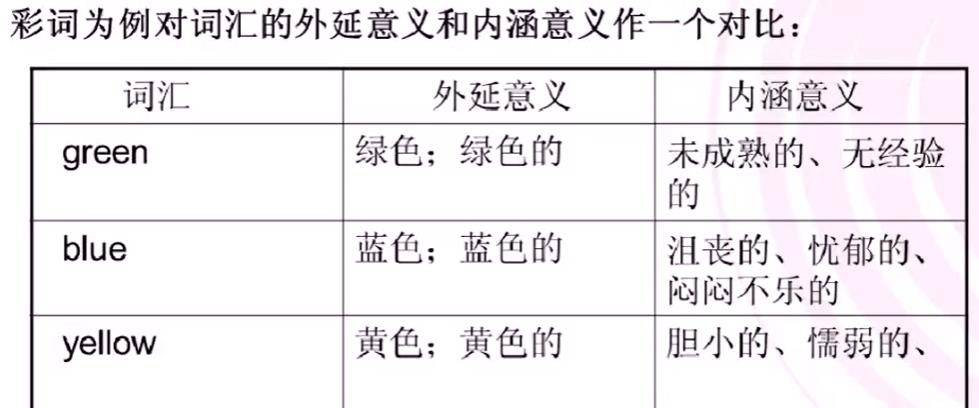
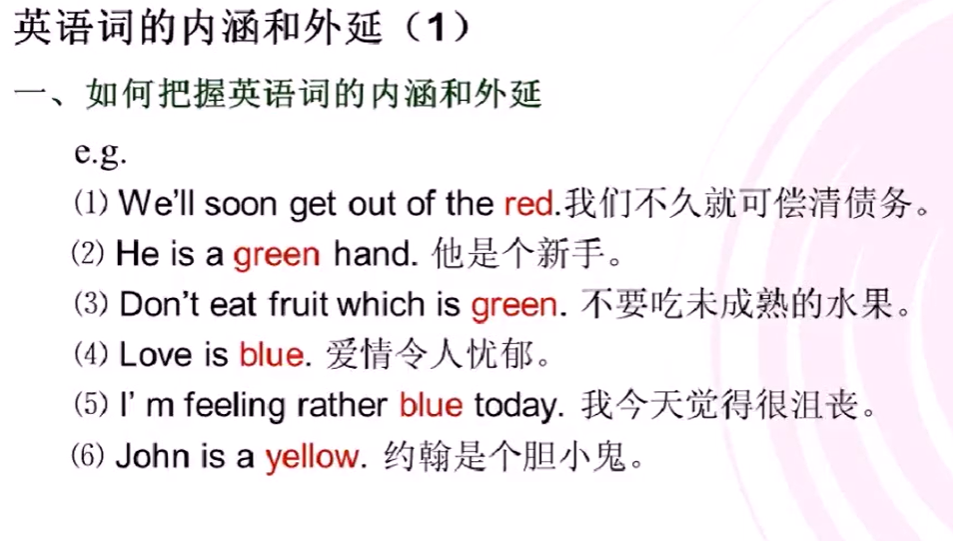
如何把握英语词的内涵和外延
e.g.
(1) We'll soon get out of the red.我们不久就可偿清债务。
(2)He is a green hand.他是个新手。
(3)Don't eat fruit which is green.不要吃未成熟的水果。
(4)Love is blue.爱情令人忧郁。
(5)I m feeling rather blue today.我今天觉得很沮丧。(6)John is a yellow.约翰是个胆小鬼。
develop a habit 养成一种习惯
develop a film 冲洗胶卷
consist of 由---组成/构成;在于,符合。
take to 喜欢,沉湎于;求助于
be obsessed with 痴迷于
complain of 抱怨,诉苦
衔接与连贯
段落的基本特征
段落( paragraph )是由表达单一中心思想( controlling
idea or central idea )的一组句子 (包括主题句topic sente-nce,发展句supporting sentences及结论句concluding sent-ence)构成,是文章结构的基本独立单位.Collecting as a serious hobby is quite different and hasmany advantages ( 主题句),( 发展句) It provides relaxa-tion for leisure hours, because just looking at one s treasuresis always a joy. One does not have to go out for amusement,since the collection is housed at home. Whatever it consists
一般现在时
二.一般现在时的变化1. be动词的变化
(1)否定句:主语+ be + not+其他。e.g. He is not a worker.他不是工人。
(2)一般疑问句:Be+主语+其他。e.g. Are you a student?你是学生吗?
Yes. I am.l No, I'm not.是,我是的。l不,我不是的。
一般现在时
三、一般现在时的用法
(6)在下列情况下表示将来:
A.在状语从句中用一般现在时代替一般将来时。如:e.g. l will give it to him as soon as l see him.
我一看见他就交给他。
B.在the more...the more ... (越......越....….)句型中,前者通常用一般现在时代替一般将来时,因为前者相当于条件状语从句。
I've always liked ... 我一直喜欢。。。
I really go for... 我很喜欢。。。
I'm really fond of... 我很喜欢。。。
I am/get excited about... 我对。。。很感兴趣
I'm crazy about... 我迷上。。。
I have a passion for 我酷爱。。。
I have a strong interest in... 我对。。。有浓厚兴趣
例句:
Do you have any hobbies?
你有什么兴趣爱好吗?
I have a strong interest in reading.
我特别喜欢读书。
What kind of book are you fond of ?
你喜欢看哪种类型的书呢?
My favorite books are those about detectives.
我喜欢看的书是关于一些侦探小说类的书籍。
一般现在的用法:
(1)一般现在是经常或习惯性的动作,常与表示频度的时间状语every day, usually, always,often,some-imes, on sunday等连用。
eg. I go to school at 6 every morning.
我每天早上6点去学校。
(2)一般现在时表示客观存在及普遍真理。
eg. Summer follows sping.
春天之后是夏天。
(3)一般现在时表示格言或警句。
eg. Pride goes before a fall. 骄者必败。
(4)一般现在时表示目前的情况或者状态。
eg. I am a teacher.
(5)以here,there等开始的倒装句,表示动作正在进行。
eg. Here comes the bus. =The bus is coming.
车来了。
(6) 在下列情况表示将来:
A. 在状语从句中用一般现在时代替一般将来时。
eg. I will give it to him as soon as I see him. 我一看见他就交给他。
B. 在 the more ... the more...(越......越......)
句型中,前者通常用一般现在时代替一般将来时,因为前者相当于条件状语从句。
eg. The harder you study, the better results you will get. 你学习越努力,成绩就会越好。
C. 在make sure (certain),see to it,mind,care,matter后的宾语从句的谓语动词用一般现在时代替一般将来时。
eg. See to it you are not late again.
注意别再迟到了。
D. 表示按计划或时间表将要发生的动作,通常有表示将来的时间状语。
eg. The plane takes off at 11:30 and arrives in Shanghai at 1:20.
飞机十一点半起飞,一点二十抵达上海
posts职位
in order to 为了…
sketch 草拟。速写
intend to do sth 准备做什么
describe:侧重描述细节,给读者或听众提供清晰的视觉图像
represent:指具有代表性或象征性地描述或讲述
sketch:指快速的勾勒或概略的叙述
picture:着重能够栩栩如生的把事物或场景等描绘出来
turning point 转折点 转机
give up 放弃 抛弃+宾语或sth
give in 屈服 让步不需要加任何宾语
promising有希望的。有前途的
sympathize:同情的。共鸣的。赞同的
disapprove v 不赞成
disapproval 不赞成。反义词:approve 批准赞成
dia前缀。表述否定意义
profession。n。职业professional adj。职业的。专业的
understandable adj。可理解的
in view of由…看来。考虑到
As a result of…作为…的结果+原因
result相关短语 result in…导致 结果是…
result from 起因于+原因
as a result 结果…(作状语)相当于so therefore
more than 的用法
amass vt. 收集
possession n. 财产,所有,possess V. 拥有
shortcomings 缺点=weak point
merit 优点=strong point
unwanted 不需要的
attic 阁楼
borough 行政区域
regulation 规定
neglect 忽视
confine 限制
blockbuster=audience picture 卖座影片
boredom 无聊乏味
confess 告白
real asset 房地产
detective 侦探
detective story 侦探小说
衔接与连贯
一、段落的基本特征
统一性,完整性,lian guan xing